Tools & selection
Hawthorne, julep and fine strainers: which job does each do?
Compare the vessel fit, particle size and handling demands of three complementary strainer formats.
Manchen editorial team · Updated
The short answer
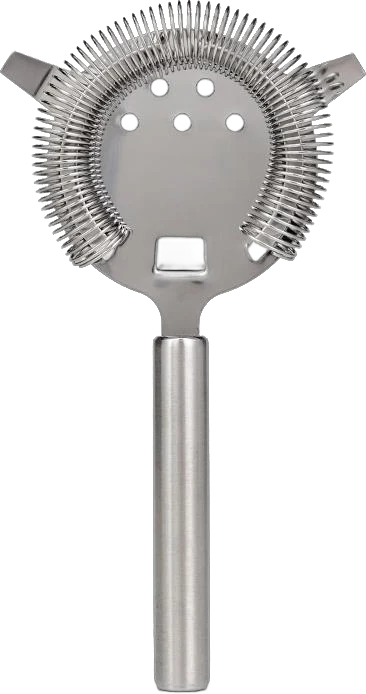
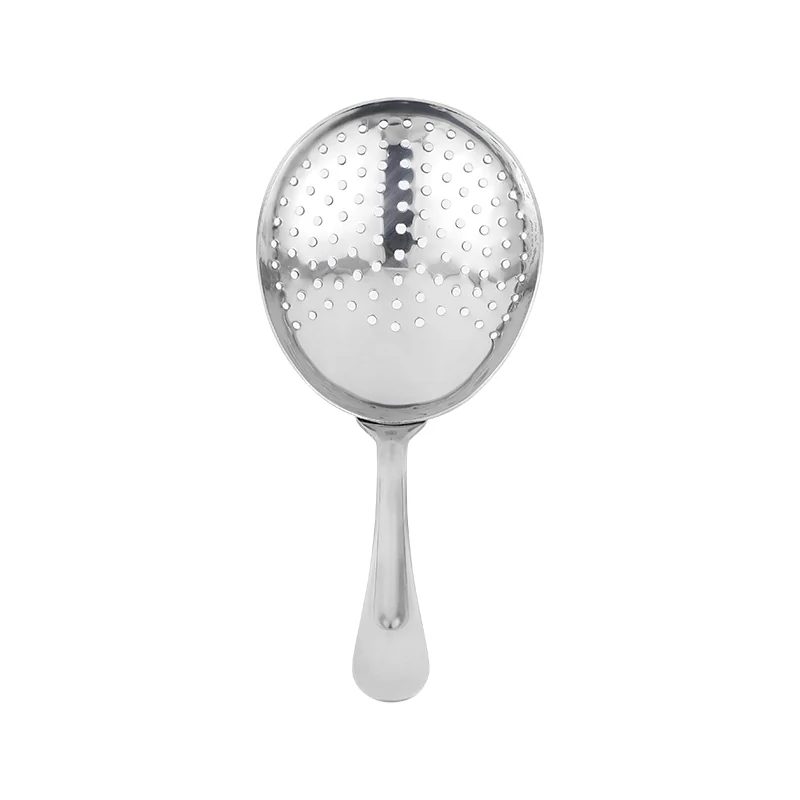
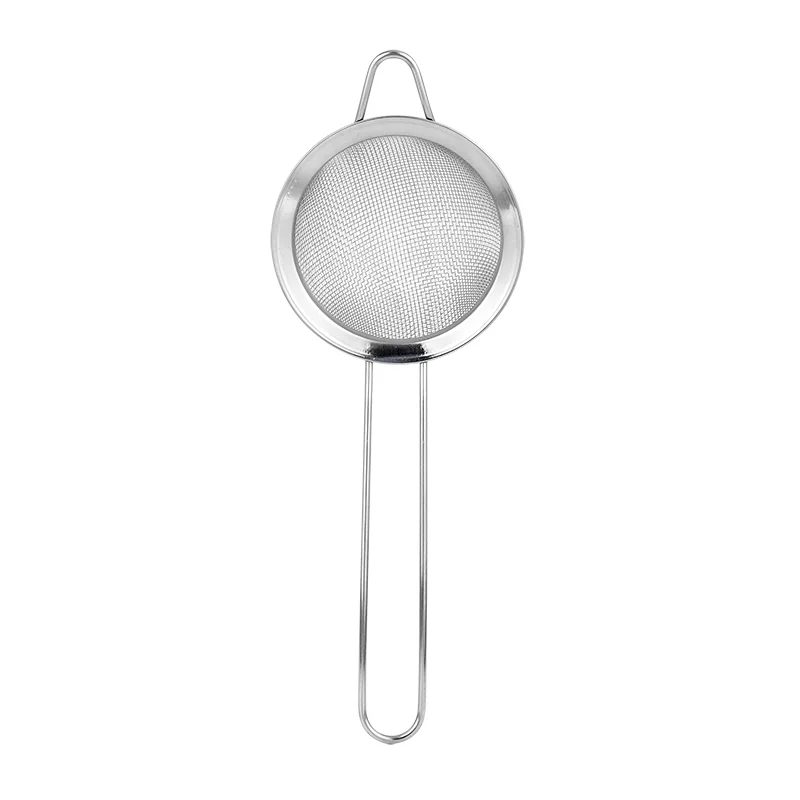
A Hawthorne strainer uses a spring around a plate; a julep-style strainer uses a perforated bowl; a fine sieve provides a separate mesh stage. Their usefulness depends on fit and the recipe. They are not three quality grades of the same tool.
Start with the vessel opening
A strainer needs to seat securely on the vessel it will serve. Compare the opening diameter, rim shape and available resting points rather than assuming a standard name guarantees universal fit. A Hawthorne spring can help conform to an opening, but its presence does not make every size compatible. A julep-style bowl needs a suitable position inside the vessel. Test the chosen combination with a safe representative pour before writing a set specification.
Decide which particles need to be retained
Holding back large ice pieces is different from reducing small ice fragments or pulp. A plate or perforated bowl can manage the primary separation, while a fine sieve may add a second stage for a smoother texture. The correct choice depends on what the recipe should retain. A clear stirred serve and a pulpy shaken drink do not present the same load. Test both appearance and flow instead of selecting the smallest holes by default.
Check fingers, handles and pour control
Evaluate how the operator holds the strainer and vessel together, including whether the handle collides with another tool or the glass rim. A stronger spring is not automatically easier to use, and a longer handle can consume valuable workstation space. Watch a complete measured pour into the intended glass. If staff need to adjust the tool midstream, identify the fit or balance issue before blaming experience or trying to pour faster.
Make cleaning a selection criterion
A removable spring can improve access if the design permits safe removal and reassembly. Mesh and small perforations need inspection for trapped ingredients. Confirm the care method for the actual finish and any joined components. Plan spare strainers around cleaning turnaround rather than hoping a quick rinse always makes the tool ready. For private-label sets, name each strainer accurately so that the customer understands why more than one may be included.
Put it into practice
- Test fit with the actual vessel, not a category label.
- Match separation to the intended drink texture.
- Inspect cleaning access around springs and mesh.
Questions worth asking
Can a fine sieve replace the primary strainer?
It may not provide the same control over a vessel full of ice. Evaluate the intended setup; many double-straining routines use the primary tool to control ice and the sieve to handle smaller particles.
Examples from the Manchen catalog
Manchen strainer and shaker examples let buyers shortlist shapes together. Ask which strainer is included in each quoted set and confirm the dimensions on samples. Choose a second fine sieve when the recipe justifies it, rather than adding it solely to increase the advertised piece count.
Explore the relevant collections
Discuss your product brief ↗References & further reading
These references explain general techniques and requirements. They do not establish certification or tested performance for a Manchen product.
