Tools & selection
Mixing glass or metal tin? Compare the complete stirring setup
Transparency, weight, handling, thermal behaviour and breakage create trade-offs; no material wins every workflow.
Manchen editorial team · Updated
The short answer
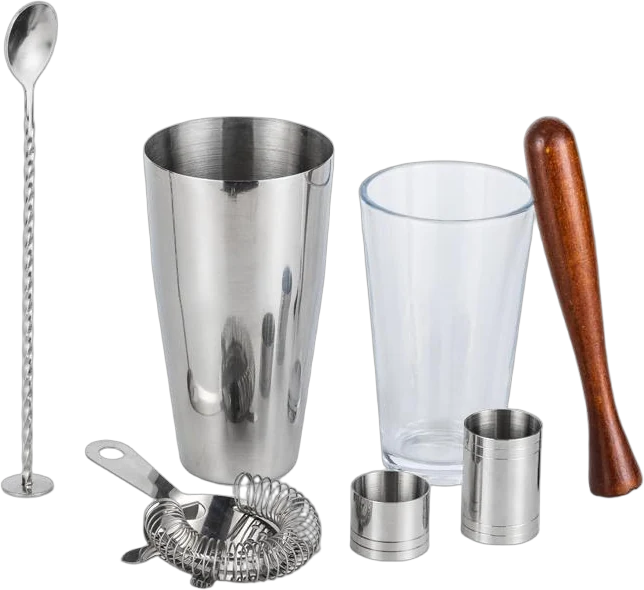
A glass vessel makes the mixture visible; a metal vessel changes handling and avoids glass-specific breakage. Evaluate either with the spoon, strainer and serving method you will use. Material alone does not establish the final drink temperature, dilution or overall service quality.
Decide how visibility contributes to the job
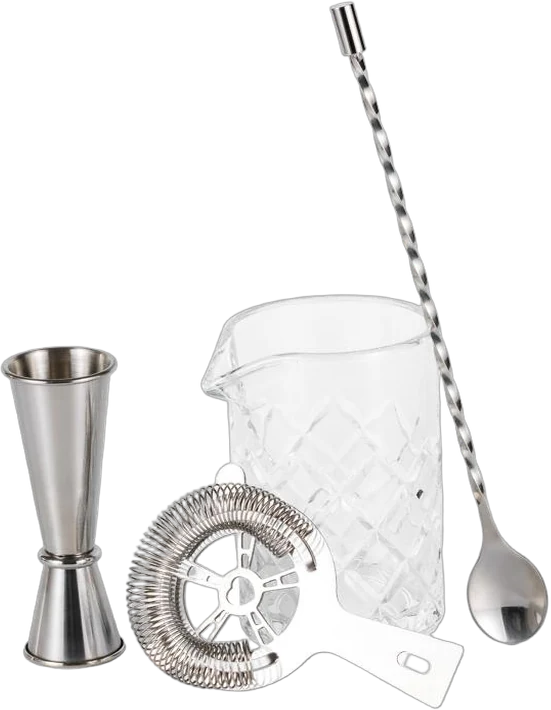
A transparent vessel can help staff observe ingredient level and ice movement, and it may form part of a presentation-led service. Opaque metal does not offer the same view, but a repeatable measured recipe may not require constant visual monitoring. Clarify whether the tool is mainly for preparation, training or guest-facing presentation. That decision helps explain why two operations can choose different vessels without one being inherently less professional.
Compare dimensions and fit before thermal claims
The vessel must give the spoon room to move and support the intended strainer. A spout can influence pouring, while a rolled rim may require another strainer position. Test reach, hand clearance and the pour into the final glass. These basic fit issues can dominate the user experience. Do not skip them in favour of a general claim that one material must always cool faster, especially when the compared items differ in wall thickness, mass and starting temperature.
Treat thermal behaviour as a controlled trial
Vessel mass, material, initial temperature, ice and recipe all influence the mixing process. If temperature or dilution is a selection criterion, compare documented trials with the relevant variables controlled. A subjective touch test on the outside is not a measurement of the liquid inside. Record the method and the result for the specific samples. Keep any performance wording limited to what the evaluation actually demonstrates rather than attaching it to every glass or metal vessel.
Plan breakage, care and replacement handling
Glass requires inspection for chips and cracks and a process that prevents thermal shock or impact. Metal can also dent or develop surface damage that affects fit and cleaning. Follow the actual item’s care guidance and assess how the vessel will be stored beside other tools. Consider replacement availability and packaging if the vessel forms part of a retail kit. Durability is a system of construction, use and care, not a one-word material label.
Put it into practice
- Identify whether visibility is operationally useful.
- Test spoon and strainer compatibility.
- Compare documented use trials rather than material slogans.
Questions worth asking
Can a shaker tin be used for stirring?
It can be evaluated for that task if its dimensions, stability, finish and strainer pairing are suitable. Check the actual workflow rather than assuming a product name forbids or guarantees the use.
Examples from the Manchen catalog
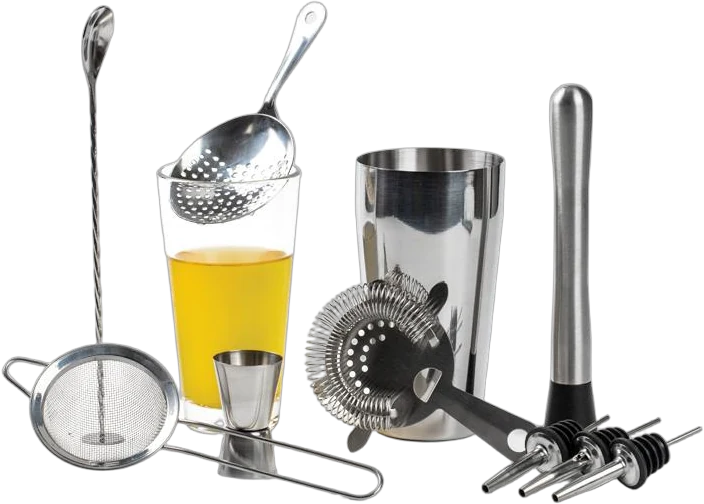
Manchen mixing-set and metal-vessel examples can support a side-by-side evaluation. Specify the intended spoon, strainer and menu load when asking for samples. Confirm each component in the selected configuration, including glass care or metal finish requirements, before presenting the set under your brand.
Explore the relevant collections
Discuss your product brief ↗References & further reading
These references explain general techniques and requirements. They do not establish certification or tested performance for a Manchen product.
