Mixing fundamentals
Double straining: when a fine mesh makes a difference
Choose a texture target, manage pulp and ice fragments, and avoid treating fine straining as a rule for every drink.
Manchen editorial team · Updated
The short answer
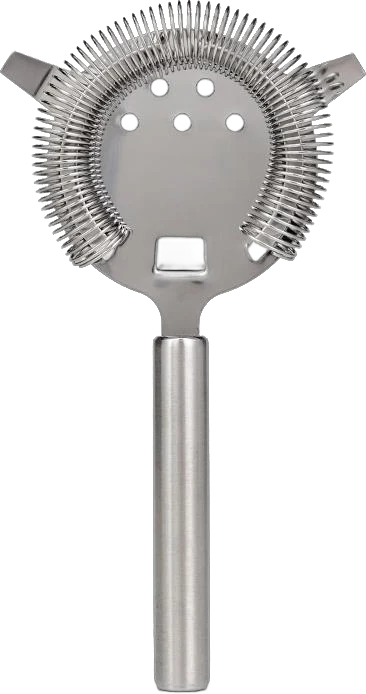
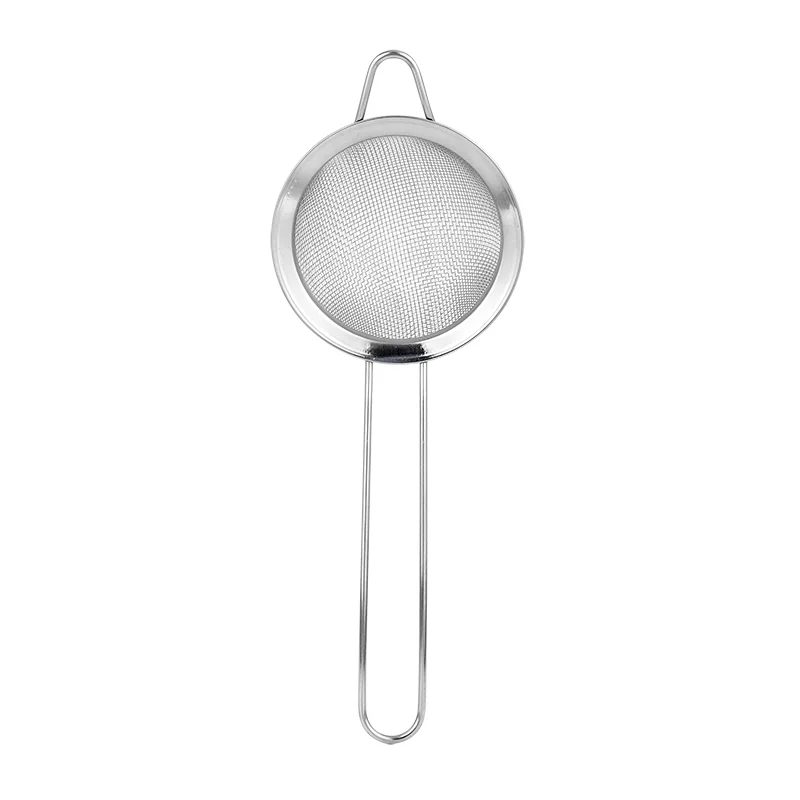
Double straining usually means pouring through a primary cocktail strainer and a separate fine-mesh strainer. It can remove smaller ice fragments, pulp and herb particles. Use it when the recipe calls for that texture, and test flow and foam retention rather than assuming finer is always better.
Define what should stay in the drink
A smooth citrus drink served without ice may benefit from removing fine fragments, whereas a deliberately rustic fruit drink may be intended to retain some texture. Fine straining also changes the path taken by foam and suspended solids. Describe the desired appearance and mouthfeel before choosing mesh. If the only goal is to keep full ice cubes inside a shaker, a well-matched primary strainer may already accomplish the task without an additional stage.
Check the two tools as an assembly
The primary strainer should sit securely on the chosen vessel, while the secondary sieve needs enough clearance above the serving glass. Check handle length, balance and whether the operator can maintain a controlled pour without touching the glass rim. A mesh basket that is too small may overflow when pulp accumulates. The useful size is not just the advertised diameter: basket depth and the practical hand position determine how comfortably the pair works.
Let the recipe reveal flow problems
Test clear liquid, pulpy juice and any foaming recipe separately. A fine sieve that drains quickly with water may slow substantially with a fruit mixture. Do not force a blocked mixture through simply to meet a service time; that can change the texture and increase splashing. Decide whether straining takes place over the final glass or another suitable vessel, and make sure the full amount can be managed without an awkward mid-pour repositioning.
Plan cleaning and spares before a busy service
Fine mesh can retain particles where a smooth strainer would rinse clear. Inspect under good light and follow the establishment’s cleaning and sanitizing procedure, especially after ingredients that create cross-contact concerns. A spare sieve may be more useful than a mesh that is theoretically finer but difficult to clean. For retail sets, an instruction card should explain what the extra tool does so that it does not become an unused accessory.
Put it into practice
- Compare the target texture before choosing mesh.
- Test the actual pulp or foam load.
- Allow room for both strainers above the serving glass.
Questions worth asking
Does a finer mesh make a drink safer?
A cocktail sieve is a texture tool, not a water-treatment or sanitizing device. Ingredient safety and hygiene still depend on sourcing, storage and the applicable preparation procedures.
Examples from the Manchen catalog
Use the Manchen bar-tool collection to compare strainer formats alongside your selected shaker. Confirm whether the fine sieve is included in a set or quoted separately, and test the complete pair. The right pairing is the one that supports the recipe and can be cleaned reliably.
Explore the relevant collections
Discuss your product brief ↗References & further reading
These references explain general techniques and requirements. They do not establish certification or tested performance for a Manchen product.
