Mixing fundamentals
More consistent pours: a practical jigger routine
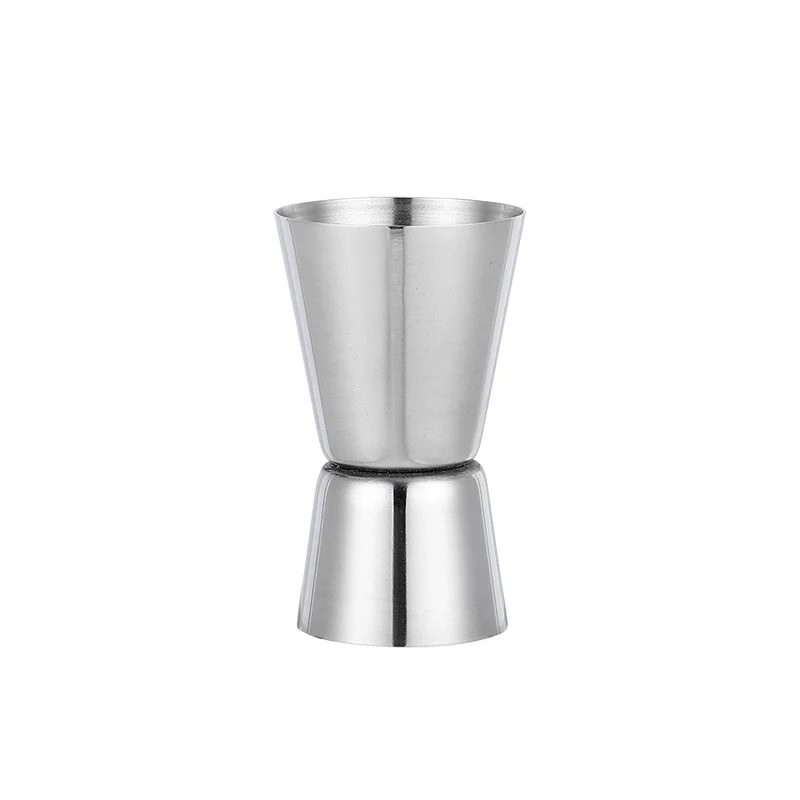
A repeatable fill, drain and handoff matters as much as the numbers engraved inside the cup.
Manchen editorial team · Updated
The short answer
Use one unit convention, identify the intended line or rim, hold the jigger steadily and follow a consistent pouring routine. Train with the actual recipe measures and tool. Clear markings help, but they cannot compensate for changing fill levels or incomplete draining.
Map the menu to a small set of measures
List the quantities used across your core recipes before choosing a jigger. A tool whose main measures match the menu can reduce repeated partial fills. Conversely, a cup with many tiny marks may be difficult to read during service. Compare the visibility of the measures staff actually use rather than rewarding the largest printed capacity range. Keep the same unit convention in training notes, recipe cards and the labels on any pre-portioned ingredients.
Practice the fill reference with water
Use water for initial training so that staff can focus on holding and reading the vessel without wasting ingredients. Identify whether a particular measure is an internal line or the brim. View the reference consistently and avoid judging a strongly tilted cup. An overfilled convex dome is not the same as a clearly defined rim measure. A simple practice sheet should show the tool, the intended line and the hand position used for the exercise.
Notice how the ingredient changes the pour
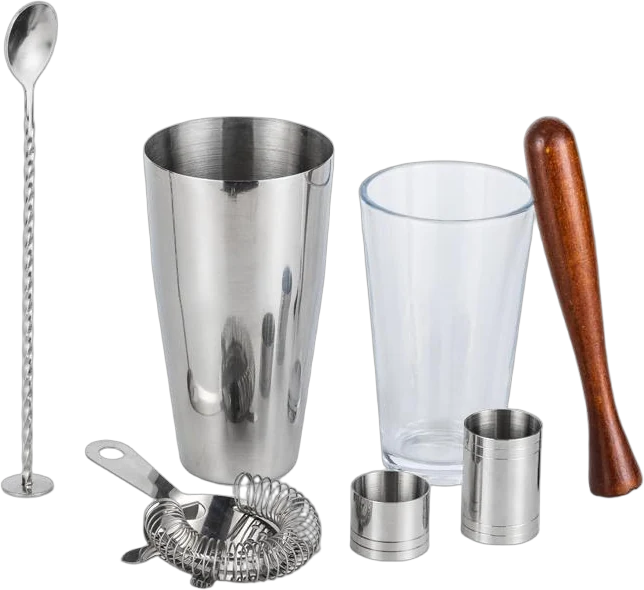
Syrup, juice and water do not necessarily drain from a small vessel in the same way. A sticky ingredient can leave a visible coating, and hurried handling can introduce drips between the jigger and shaker. Test the agreed procedure with representative menu ingredients after the water exercise. Decide how staff will handle residual liquid and cleaning between incompatible ingredients. Do not solve a training problem by inventing a correction factor that nobody can reproduce at speed.
Review consistency across people, not one perfect pour
Ask several team members to repeat the same measures using the proposed routine. Look for confusing marks, uncomfortable grip changes or a measure that regularly requires two separate pours. This is an operational usability check, not a substitute for agreed capacity inspection. Record the tool version and update the training card if markings or cup geometry change. A repeatable routine is valuable only if new staff can learn it without guessing what the previous team meant.
Put it into practice
- Match common menu measures before choosing capacity.
- Document fill reference and draining routine.
- Repeat trials with several operators and ingredients.
Questions worth asking
Will more internal marks always improve consistency?
Only if the marks are readable and relevant. An uncluttered tool that matches the menu can be easier to train than a dense scale with several rarely used measures.
Examples from the Manchen catalog
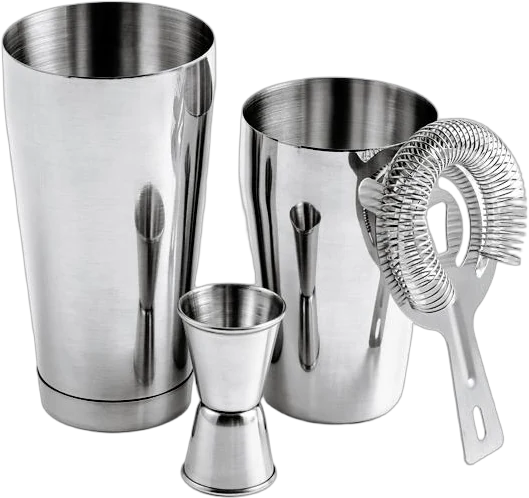
When comparing Manchen jiggers, use the menu measure list to select candidate shapes and capacity pairs. Ask for the actual marking layout, then include that sample in staff trials. For a coordinated set, make sure the jigger supplied in the final kit matches the one approved during training.
Explore the relevant collections
Discuss your product brief ↗References & further reading
These references explain general techniques and requirements. They do not establish certification or tested performance for a Manchen product.
