Tools & selection
Reusable cocktail picks: presentation, handling and care
Compare length, tip, ornament and cleaning access while keeping decorative accessories separate from environmental claims.
Manchen editorial team · Updated
The short answer
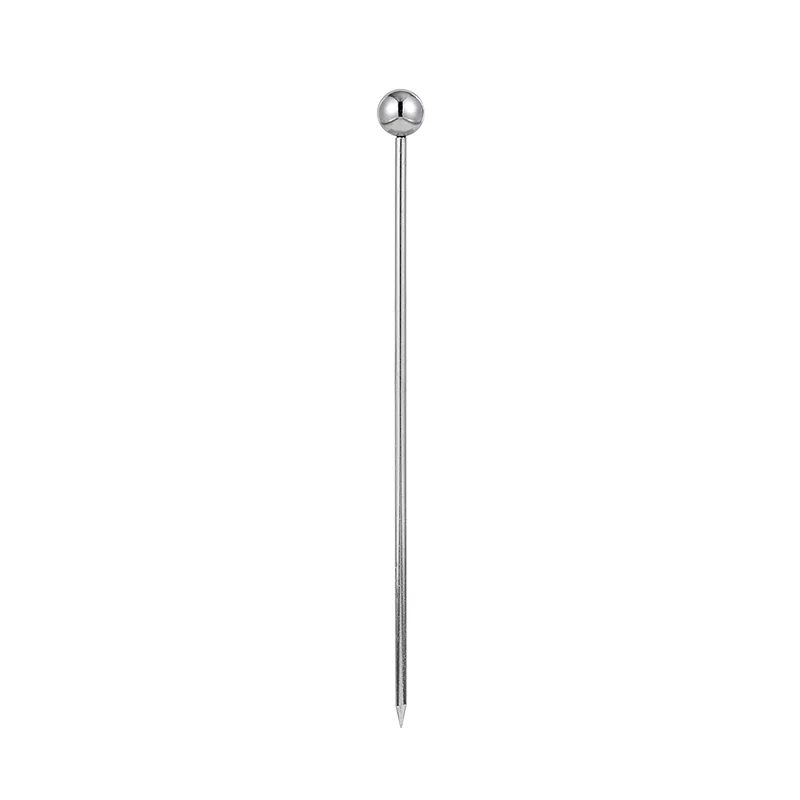
A reusable pick should fit the garnish and glass, be comfortable to handle and be practical to clean. Check sharp ends and decorative joints carefully. Reusable describes intended repeated use; it does not by itself prove a lower environmental impact or suitability for every guest and setting.
Size the pick to the garnish and serving vessel
A garnish can sit across a glass, rest inside it or be served separately. These arrangements require different lengths and balance. Place the intended garnish on the sample and check that the pick does not tip, sink awkwardly or obstruct drinking. A large ornamental end may look distinctive in a photograph but change the balance with a small garnish. Review both the empty tool and the complete served drink before approving the profile.
Consider the guest’s handling, not only the bartender’s
The guest needs a clear place to hold the pick and a reasonable way to set it down. Assess sharp points, small detachable ornaments and the suitability of the service context. A public event or family-focused venue may call for a different accessory choice from a controlled cocktail service. Provide handling guidance where needed and avoid presenting a pointed decorative object as a universally harmless giveaway. Keep damaged or loose components out of service.
Inspect cleaning access around decorative details
Crevices, joined pieces and textured ends can retain food residue. Trial the actual garnish, then inspect after the proposed cleaning procedure. Follow applicable cleaning and sanitizing rules for reusable food-contact utensils. Confirm whether the finish and any non-metal component tolerate the process. Do not assume a metallic colour means one solid alloy or that a smooth visible shaft makes every hidden joint equally accessible to cleaning.
Describe repeated use without overclaiming sustainability
Useful product information includes material, dimensions, handling and care. A comparative environmental claim would need a defined comparison that accounts for manufacturing, washing, transport, loss rate and useful life. Without that analysis, avoid broad promises such as “zero impact” or “always greener.” For an operator, collection and cleaning routines matter: a reusable tool that is routinely discarded or lost does not perform the intended operational role.
Put it into practice
- Trial the complete garnish-and-glass arrangement.
- Inspect sharp tips, joints and detachable parts.
- Specify a collection and cleaning workflow.
Questions worth asking
Does stainless appearance prove food-contact suitability?
No. Confirm actual materials, finish and applicable documentation for the exact product and intended use. Appearance cannot establish compliance.
Examples from the Manchen catalog
When discussing Manchen decorative bar accessories, send the garnish type, glass and intended audience along with the product reference. Ask which material and finish are offered and whether the construction supports your cleaning method. Keep any environmental claim separate from the simple fact that an item is designed for repeated use.
Explore the relevant collections
Discuss your product brief ↗References & further reading
These references explain general techniques and requirements. They do not establish certification or tested performance for a Manchen product.
