Tools & selection
Bottle pourers: check neck fit, flow and cleaning
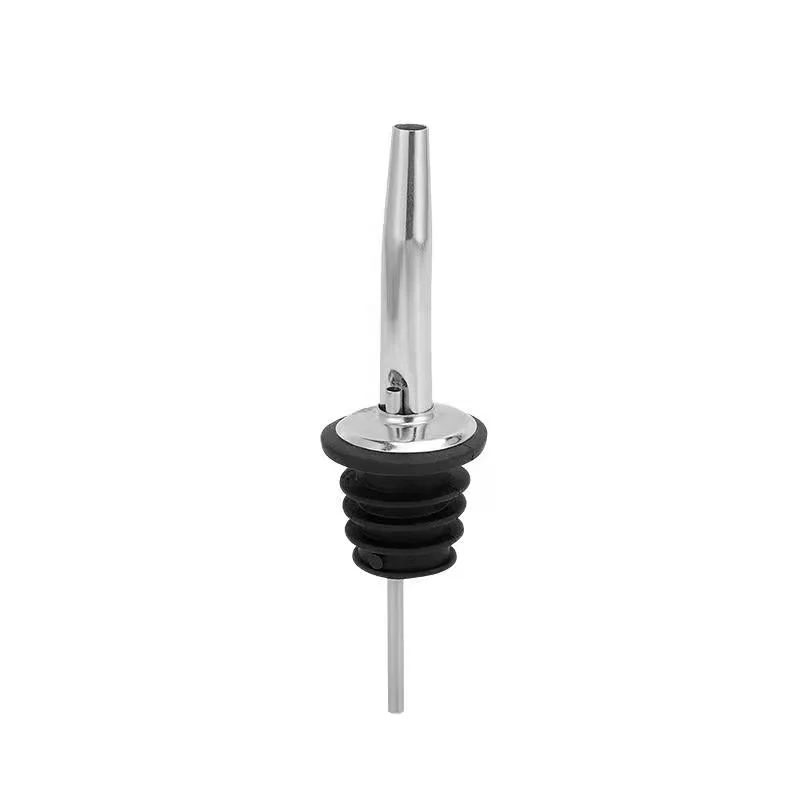
A pourer controls the delivery path, but a free-flow spout is not automatically a calibrated measuring device.
Manchen editorial team · Updated
The short answer
Match the stopper to the actual bottle neck and test flow with the intended liquid. Check venting, drips, storage and cleaning access. Unless a specific device has a confirmed measuring function, do not use elapsed pour time as proof of a fixed volume.
Bottle-neck fit is a physical sample question
Neck openings, internal profiles and lip shapes differ between bottles. A flexible stopper that fits one bottle may sit loosely or too deeply in another. Test the actual bottle assortment, including how securely the pourer stays seated while tipping and returning upright. Do not describe a part as universal based on one sample. If the brand changes bottle suppliers, repeat the fit check rather than assuming the neck specification remained identical.
Flow depends on more than the visible spout
Air needs a route into the bottle as liquid leaves. A blocked vent or an unsuitable angle can produce interrupted flow. Thick syrup and a thinner liquid may also behave differently through the same assembly. Trial a complete dispense using representative ingredients, not only water. Note the start, steady flow and stop, then check any drips after the bottle is returned. A smooth-looking video does not replace evaluation across your actual bottle and ingredient combinations.

Keep dispensing and measuring separate
A free-flow pourer can make directing a stream convenient, but the delivered quantity still depends on technique, liquid and timing. For measured recipes, a suitable jigger remains a clear option. A device sold as a measured pourer requires its own capacity, operating and inspection criteria. Do not transfer such a claim to a visually similar spout. This distinction is particularly important when preparing retail packaging or training staff to reproduce a recipe.
Plan removal, cleaning and overnight handling
Residue can accumulate in narrow passages and around the stopper. Confirm whether the product can be disassembled and how small parts are retained. Follow the establishment’s ingredient-storage and hygiene procedures rather than assuming an open spout is a long-term bottle closure. Check any supplied cap for its intended role; a dust cover is not necessarily a leakproof stopper. Keep a replacement list so that worn inserts do not remain in use solely because the metal spout looks intact.
Put it into practice
- Test each actual bottle-neck format.
- Check the intended ingredient, not only water.
- Confirm whether the product dispenses or measures.
Questions worth asking
Can one pourer fit every bottle?
Do not assume so. Match the stopper, opening and bottle geometry, then keep an approved bottle list for the specific product.
Examples from the Manchen catalog
Use Manchen pourer and stopper examples to identify the arrangement you need, then supply bottle-neck information and representative bottles for a sample check. Confirm caps, inserts and packing as separate components. Request a measuring claim only when the exact item has that verified function.
Explore the relevant collections
Discuss your product brief ↗References & further reading
These references explain general techniques and requirements. They do not establish certification or tested performance for a Manchen product.
