Tools & selection
Jigger shapes and rims: compare more than capacity
Tall, wide, rolled-rim and stepped designs change visibility and handling; test them against the same menu measures.
Manchen editorial team · Updated
The short answer
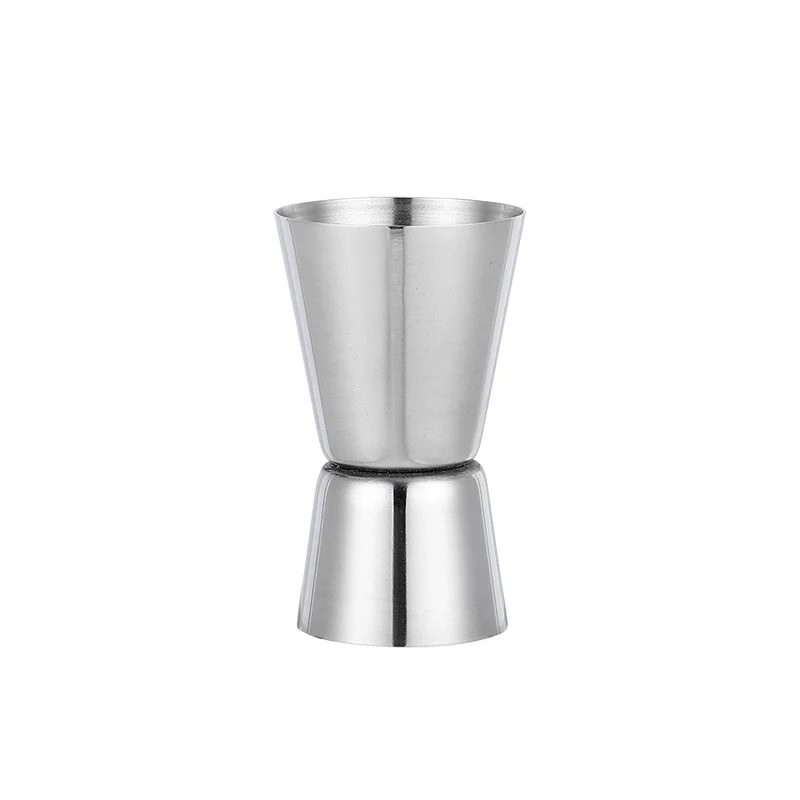
Choose a jigger by its usable measures, readability, grip and pouring behaviour. Tall cups may feel different from wider bowls, and rim treatment affects contact and finishing. The best shape is the one that supports your routine while meeting the agreed capacity specification.
Use one menu measure to make comparisons fair
A 25/50 mL option and a different ounce-based option may differ in more than shape. Match the intended measures first so that a capacity mismatch does not masquerade as an ergonomic preference. Check both ends of a double jigger and each internal mark used in your recipes. Keep brim capacity, internal measure and decorative line distinct on the drawing. This gives a clear starting point for judging whether the form itself is useful.
Compare visibility under realistic lighting
Polished interiors can reflect the work area, while deep narrow cups may place a small line farther from the eye. Test with the kinds of liquids and lighting found at the bar rather than looking at an empty tool under showroom lights. Check the contrast and permanence of the actual markings on the supplied finish. More lines are not always better if operators repeatedly stop to identify the correct one during service.
Test rims, grip and transitions between cups
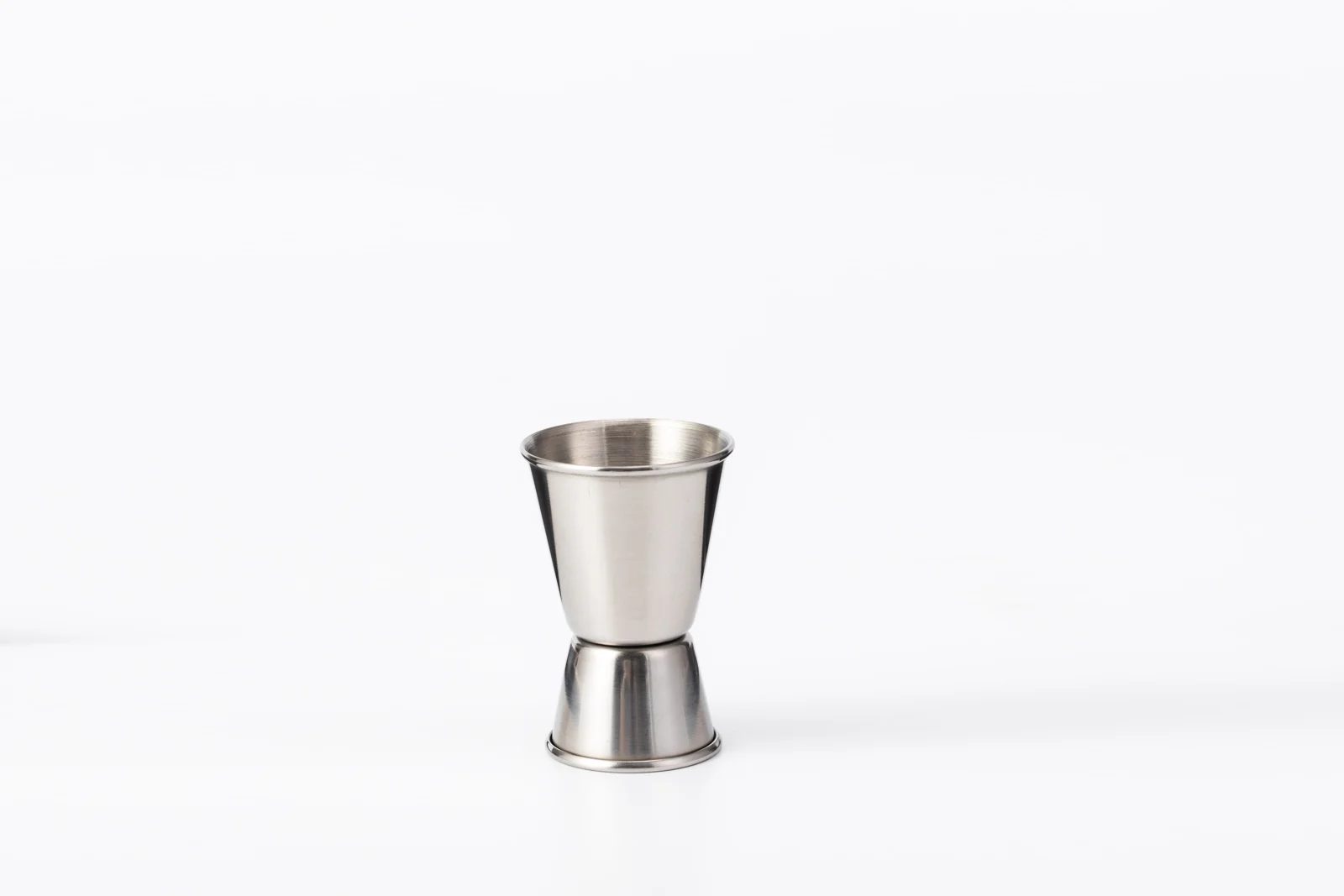
Inspect rim smoothness, the joint between the cups and how the tool moves when the operator switches ends. A rolled edge changes the physical profile, but its appearance alone does not certify a comfortable or drip-free pour. Test a complete fill and transfer into the chosen vessel. Check whether the tool rests stably when set down, and whether the gripping area remains comfortable with the normal cleaning and handling routine.
Approve the geometry together with the packaging
A taller jigger may require a different insert or stand opening, while a wider cup may interfere with neighbouring tools. Keep the approved sample and a drawing or dimensional record for the selected shape. If a replacement is offered later, compare the dimensions and markings before accepting it as equivalent. A shared capacity pair is only one part of equivalence; the user experience and fit in the complete kit can still change.
Put it into practice
- Compare the same unit and capacity pair.
- Read the actual marks with representative liquids.
- Check rims, cup transitions and stand fit.
Questions worth asking
Does a taller jigger measure more accurately?
Shape alone does not establish accuracy. The volume specification, marks, measurement method and user’s filling routine all need to be considered.
Examples from the Manchen catalog
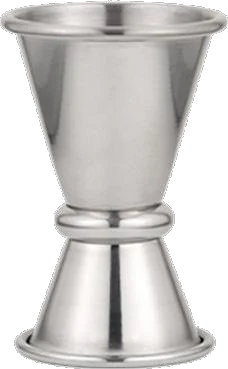
Manchen jigger images provide a starting point for comparing cup shapes and rim styles. Shortlist the required capacity pair, ask for the marking layout and test the shape in the intended set. Confirm the selected configuration rather than assigning one specification to every finish shown in a series.
Explore the relevant collections
Discuss your product brief ↗References & further reading
These references explain general techniques and requirements. They do not establish certification or tested performance for a Manchen product.
