Tools & selection
Choosing a bottle opener for service, gifts and travel kits
Choose for the closure and working motion first, then review leverage, edges, durability checks and branding space.
Manchen editorial team · Updated
The short answer
Select an opener for the closure it is designed to remove and the way it will be used. Check engagement, grip, leverage, edges and storage. A compact gift opener, a service opener and a corkscrew may solve different tasks; they should not be treated as equivalent because each opens some kind of bottle.
Begin with the closure and bottle assortment
List whether the operation handles crown caps, twist closures or corks, then select tools intended for those tasks. Do not test an opener on an unrelated closure and interpret failure as poor quality. Use representative bottles from the actual service assortment, including any unusual lip geometry. For retail packaging, name the function clearly so that the customer does not mistake a decorative opener for a universal bottle tool or use excessive force on an unsuitable closure.
Evaluate engagement and the complete hand motion
Check how the opening engages the cap and where the supporting point rests. The operator should be able to identify the intended action without balancing the tool at an unstable angle. Compare grip with representative users and check whether the handle interferes with neighbouring objects. Do not claim that extra weight automatically reduces effort: useful leverage depends on the geometry and contact points as well as the tool’s mass.
Inspect edges, joints and stored condition
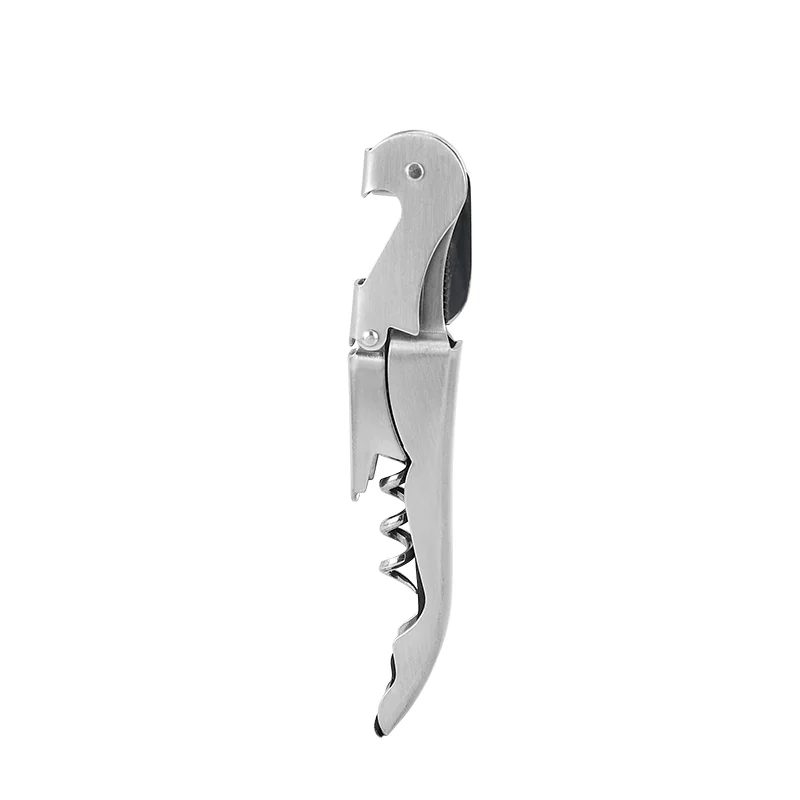
Review the opening edge, any moving joint and the finish after agreed sample-use trials. Watch for burrs, looseness or damage that could affect safe handling. A tool carried in a roll or pocket also needs a storage plan appropriate for its profile. Folded components and combination tools should be assessed in both their open and stored positions. Keep acceptance observations factual; a small demonstration is not a lifetime durability guarantee.
Place the logo where it does not impair function
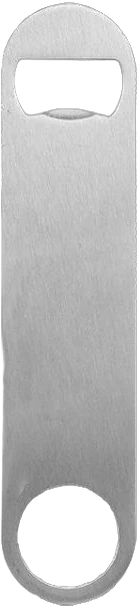
A broad flat face can provide a useful marking area, but the opening and grip still take priority. Approve artwork on a sample so that the logo is readable without covering a functional edge or creating unwanted surface changes. Check which side is visible in normal use and how the tool sits in the package. When it is part of a larger kit, make sure the opener contributes a real function rather than merely adding one to the piece count.
Put it into practice
- Identify closure types and representative bottles.
- Review engagement, grip and release in one trial.
- Keep logo placement clear of functional areas.
Questions worth asking
Does every opener work with wine corks?
No. A crown-cap opener and a cork-removal tool have different intended functions. Confirm the actual tool type and instructions before including it in a set.
Examples from the Manchen catalog
Manchen opener and cocktail-kit options can be shortlisted by the closures your customers use. Identify the exact opener in the component list, then approve grip, edge quality and logo location together. Keep wine-specific functionality separate unless the selected item actually provides it.