Bar setups & service
Barware stand layouts: fit, access and a place to dry
Compare a stand with the final tools installed, including handle clearance, stability and the difference between display and drying.
Manchen editorial team · Updated

The short answer
A stand should fit the exact tools, remain stable during normal removal and allow convenient access. It is not automatically a drying rack. Confirm material, opening dimensions, surface care and whether wet tools can be placed there under the specified instructions.
Evaluate the footprint in real use
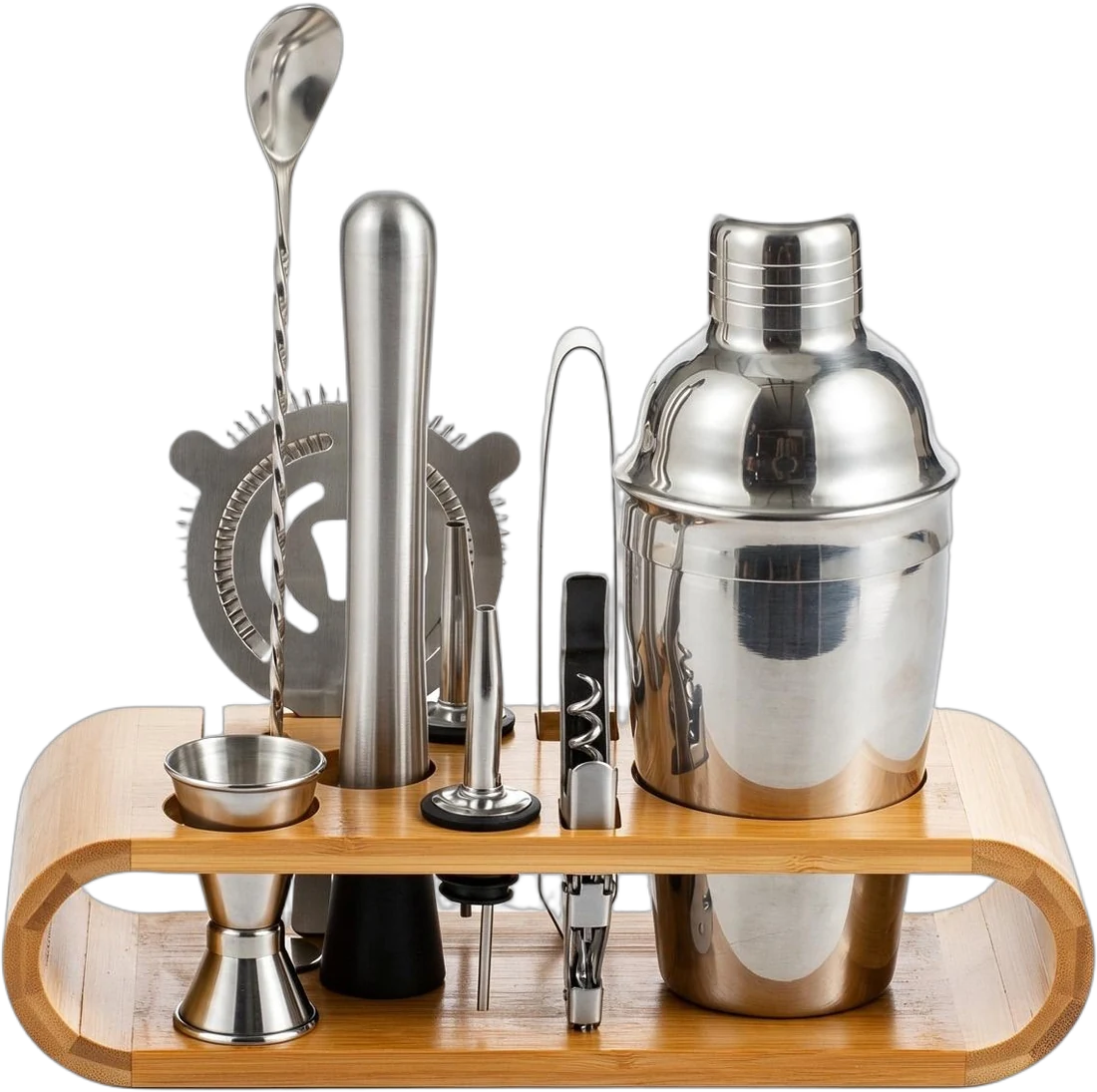
A stand’s assembled width and depth do not describe the full clearance needed to remove a long spoon or lift a shaker. Place it in the intended counter or shelf location and test the tallest and widest pieces. Check cabinet clearance, nearby glassware and whether the user must move another tool to reach the one needed. A compact photograph can conceal a large operating envelope. Keep product dimensions and packed dimensions as separate records.
Check openings with the final component list
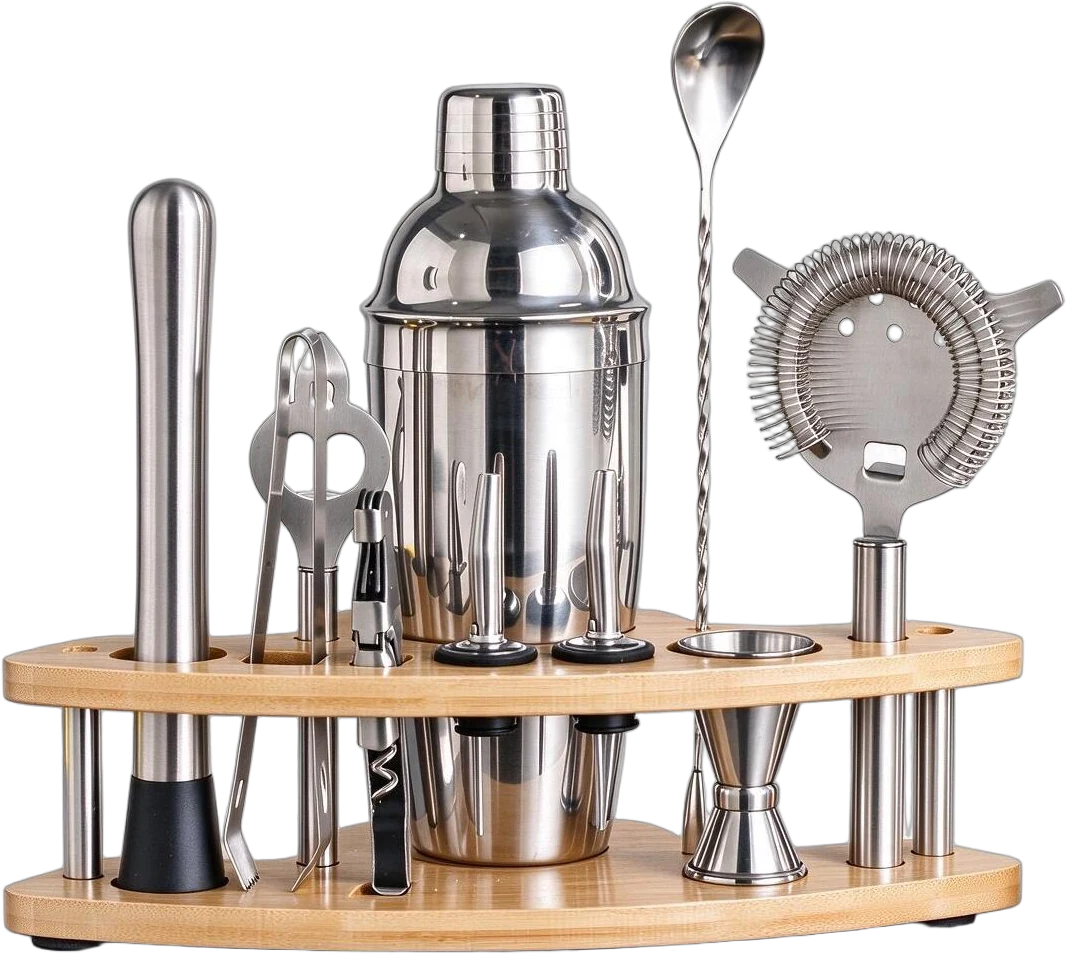
A layout approved for one jigger or strainer may not fit another variant with a different rim or handle. Insert and remove each supplied component, then repeat with the complete assortment installed. Look for sharp contact points, rubbing between visible finishes and parts that sit too loosely. Confirm the intended orientation so that packaging and instructions show the same arrangement. If components are substituted later, treat the stand fit as an item to recheck.
Distinguish presentation from moisture management
A stand can organize clean, dry tools without being designed to collect and drain water. Closed holes, joints and coated surfaces may retain moisture. Ask how the selected construction should be cared for and where parts should dry before storage. Do not assume a bamboo appearance establishes the material or its water resistance. If the intended use includes damp tools, require instructions and a suitable tested arrangement rather than adding an unsupported waterproof claim to the product description.
Test stability through the everyday sequence
Try removing the most frequently used tool while the other components remain in place, then test near-empty storage. A stand can behave differently as the weight distribution changes. Use a normal controlled motion on the intended stable surface; avoid inventing a universal stability rating from one informal attempt. For retail sets, check whether the customer can understand assembly and whether misplaced tools create awkward protrusions. A useful display should simplify returning each item to its place.
Put it into practice
- Test tool removal with the whole assortment installed.
- Keep display use separate from drying claims.
- Recheck fit whenever a component changes.
Questions worth asking
Does the category name prove the stand is bamboo?
No. Confirm the material and finish for the selected configuration. A category can contain different stands and presentation arrangements; appearance alone does not establish composition or care requirements.
Examples from the Manchen catalog
Use Manchen stand-set photographs to shortlist arrangements, then request the exact component list and stand dimensions. Compare the assembled sample in your own display space and confirm packing separately. This is especially useful when developing a branded assortment whose jigger, spoon or strainer differs from the reference photograph.